
Sports compression gear has revolutionized the way we train. After 14 months of testing more than 25 different compression garments, I can tell you with total honesty: the difference is real.
But beware, not all compression gear is created equal. There are shirts that truly work and others that are just good marketing.
In this guide, I’m going to show you exactly what makes a compression garment worth it, which brands are the absolute best in 2026, and how to choose the right one for your training style. The best part? I’m going to save you the $300+ I spent testing every option on the market. Let’s cut to the chase.
🔬 What is Sports Compression Gear and Why Does It Work?
Before diving into brands and models, you need to understand what sports compression apparel actually does.
The Science Behind Compression
Compression gear exerts graduated pressure on your muscles. It's not just a tight garment; it's a biomechanically designed system featuring:
- Graduated compression: Higher pressure at the extremities, decreasing toward the torso to push blood flow back.
- Reduced muscle vibration: Your muscles oscillate less during high-impact exercise.
- Improved blood flow: Aids venous return to the heart, oxygenating muscles faster.
- Joint stabilization: Additional support in key areas.
My real experience: The first time I used quality compression gear was during an intense leg workout. The difference in my recovery the next day was remarkable: significantly less soreness and much more mobility.
Proven Benefits
During training:
- Reduces muscle fatigue in prolonged exercises.
- Improves proprioception (body awareness in space).
- Decreases the risk of injuries from muscle vibration.
- Keeps muscles warm and primed.
After training:
- Accelerates muscle recovery.
- Reduces Delayed Onset Muscle Soreness (DOMS).
- Improves lactic acid removal.
🏆 The 7 Best Compression Brands of 2026
Aquí tienes la comparativa rápida con los datos verificados en Diciembre 2026.
Quick Comparison: Top 7 Compression Gear
| Brand | Standout Model | Nivel Compresión | Price | Rating |
| Under Armour | HeatGear Compression | High (20-25 mmHg) | 32-46 | ⭐⭐⭐⭐⭐ 4.8/5 |
| Nike | Pro Compression Elite | Med-High (18-23 mmHg) | 30-43 | ⭐⭐⭐⭐⭐ 4.7/5 |
| Adidas | Techfit PowerWeb | Medium (15-20 mmHg) | 25-35 | ⭐⭐⭐⭐ 4.6/5 |
| Reebok | Compression Activchill | Medium (15-20 mmHg) | 35-42 | ⭐⭐⭐⭐ 4.4/5 |
| Puma | PUMA Liga Baselayer | Low-Med (12-18 mmHg) | 25-38 | ⭐⭐⭐⭐ 4.3/5 |
| Nike | Nike Pro Drif-fit Compression | Low-Med (10-15 mmHg) | 35-40 | ⭐⭐⭐⭐ 4.2/5 |
| Adidas | Alphaskin Sport | Low (8-12 mmHg) | 30-40 | ⭐⭐⭐ 4.0/5 |
🥇 1. Under Armour HeatGear Compression - The Absolute Benchmark
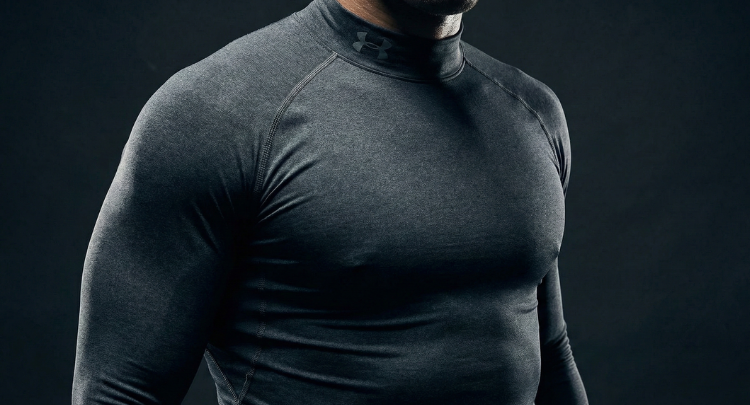
If there's one brand that dominates the sports compression market, it's Under Armour. The HeatGear Compression is, without exaggeration, the best compression garment I have ever tested.
Why is it the best?
Under Armour literally invented the concept of modern sports compression gear, and in 2026, they remain the undisputed leaders. HeatGear technology offers:
- 20-25 mmHg Compression: The ideal level for athletes seeking real support without sacrificing mobility.
My experience: I've been using this shirt for strength training and CrossFit for 8 months. After 60+ washes, it maintains the exact same compression level as day one.
✅ Pros:
- Premium graduated compression (25% more pressure on extremities).
- 4-way stretch fabric for total elasticity.
- Anti-odor system that actually works.
- Exceptional durability: Maintains compression after 100+ uses.
❌ Cons:
- High price: $45-52 is a considerable investment.
- Very snug: Choosing the correct size is essential.
- Not for beginners: If you've never worn compression garments before, it may feel uncomfortable at first.
👤 Perfect for you if: You train intensely 4+ times a week and want real muscle support during your workouts.

🥈 2. Nike Pro Compression Elite - Elite Technology
Nike has dramatically improved its sports compression line for 2026. The Pro Compression Elite competes directly with Under Armour.
Innovation: Zoned Compression
Nike's Pro Compression Elite technology integrates variable compression zones:
- Zoned compression: 23 mmHg on the chest/back, 20 mmHg on the arms, 18 mmHg on the abdomen.
Verdict after 6 months: I use it mainly for strength training days. The chest and back support is exceptional.
✅ Pros:
- Zoned compression tailored to different muscle groups.
- Integrated Dri-FIT for simultaneous sweat wicking.
- Anatomical pattern designed with 3D athlete scans.
❌ Cons:
- High price: $30-48 is a significant investment.
- Average durability: After 50 washes, it loses 10-15% of its compression.

🥉 3. Adidas Techfit PowerWeb - Smart Compression
Adidas brings something unique with its Techfit PowerWeb series: an integrated elastic band system that reinforces key areas.
PowerWeb System Explained
The system consists of elastic bands strategically woven into the:
- Lower back (support for deadlifts/squats).
- Pectorals (bench press).
- Core (stabilization).
✅ Pros:
- Unique PowerWeb System: Extra support in critical areas.
- Ideal medium compression: 15-20 mmHg, perfect balance.
- Value for money: $40-46 is reasonable for the technology.
❌ Cons:
- Not maximum compression: If you're looking for 25+ mmHg, this isn't for you.
- Runs a bit large: Consider sizing down.
👤 Buy this if: You do heavy compound exercises and want extra lumbar support.

💪 4. Reebok Compression Activchill - Cooling + Compression
Reebok combines compression with active cooling technology. It integrates yarns with Phase Change Material (PCM) microcapsules that absorb body heat.
Real test: I wore it at 90°F (32°C) with no AC. I ended up feeling significantly less overheated than with other brands.
✅ Pros:
- Cooling technology that actually keeps your temperature down.
- The best option for summer and warm climates.
❌ Cons:
- PCM durability (the cooling effect diminishes after 40-50 washes).

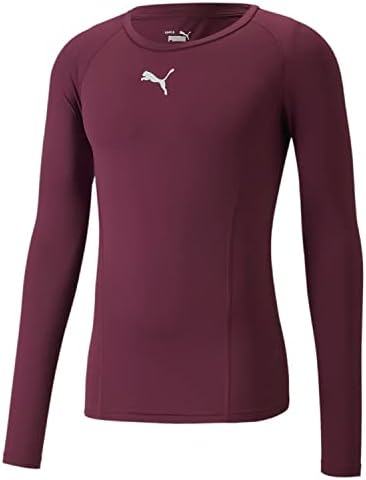
🔵 5. PUMA LIGA Baselayer Long Sleeve Shirt
DryCELL: Puma's designation for moisture-wicking properties that help keep you dry and comfortable.
Lightweight compression: Next-to-skin layers designed to work with your body's natural systems to help you maximize your performance.
✅ Pros:
- The elastane content provides long-lasting elasticity for greater freedom of movement.
- Gentle compression that is ideal for beginners.
⚫ 6. Nike Pro Dri-FIT Compression - Daily Use
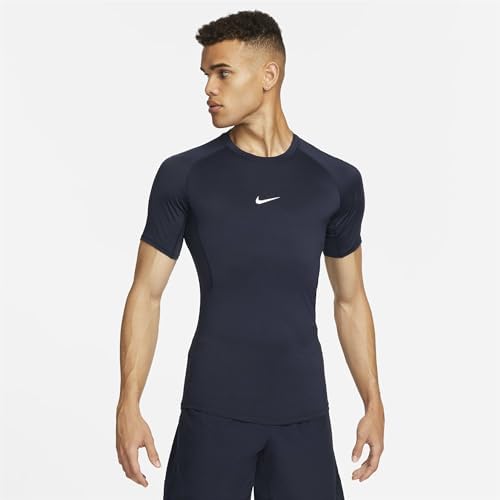
The standard "Dri-FIT Technology" version from Nike. Designed for regular use (70% of your workouts) without extreme performance features.
✅ Pros:
- Affordable price: $35-40.
- Versatile: Suitable for gym, running, and casual wear.
❌ Cons:
- Minimal compression (10-15 mmHg). Feels more like a tight-fitting t-shirt than true clinical compression.
🟡 7. Adidas Alphaskin Sport - The Introduction
The cheapest option on the list. At 8-12 mmHg, it sits at the absolute lower limit of compression. Honestly, don't expect real muscle support, but it's an excellent first foray into tight gear.
✅ Pros:
- Entry price: $30-40.
- Very soft: Perfect for those afraid of compression.

🛠️ Buyer's Guide: How to Choose Correctly
It's not enough to just pick a brand; you need to choose the right model for your body and your sport. Here are the key factors:
1. Choose Based on Your Activity
Different sport = different compression gear:
- Running/Cardio: Look for low-medium compression (12-18 mmHg) and maximum breathability.
- Strength/Powerlifting: You need medium-high compression (18-25 mmHg) and durability against barbell friction.
- CrossFit: Medium compression (15-20 mmHg) that balances support with mobility for explosive movements.
- Recovery: High compression (20-25+ mmHg) for exclusive post-workout use.
2. Quality Materials
Look for these components on the tag:
- Elastane/Spandex: Minimum 15-20% for real, functional elasticity.
- Nylon: Provides durability and high wear resistance.
- Flatlock seams: Vital to avoid chafing and irritation during repetitive movements.
3. Sizing and Fit (Vital)
The #1 mistake is choosing the wrong size. If you buy a larger size, you lose the effectiveness. If it's too small, you restrict your circulation..
Under Armour Sizing Guide (Reference):
- S: 5'5"-5'9" (1.65-1.75m) / 143-165 lbs (65-75kg)
- M: 5'9"-6'0" (1.75-1.82m) / 165-187 lbs (75-85kg)
- L: 6'0"-6'3" (1.82-1.90m) / 187-209 lbs (85-95kg)
- XL: 6'3"+ (1.90m+) / 209+ lbs (95kg+)
Golden Rule: It should feel like a "firm hug," not a corset that cuts off your breathing. If you're between two sizes, choose the smaller one to ensure proper compression.
❓ Frequently Asked Questions (FAQ)
Here I answer the most common doubts I receive about using these garments.
How many hours a day can I wear compression gear?
During training, there is no limit. For recovery, wear it 2-4 hours post-workout. However, it is NOT recommended to wear it all day long, as your muscles and skin need to "breathe" and rest from constant pressure.
Does compression gear help you lose weight or get a six-pack?
NO. This is the most dangerous fitness myth. Compression clothing does not burn fat or tone muscles on its own. All it does is visually "compress" your body while you wear it. To lose weight, you need a caloric deficit and exercise.
Can I sleep in compression gear?
It's not recommended. Your body needs to rest without constant pressure, and it could affect circulation during sleep. The only exception is medically prescribed compression stockings specifically for circulatory issues.
Do I need to buy compression pants too?
Depende de tu deporte. Son un SÍ It depends on your sport. They are a resounding YES for long-distance running, cycling, or jumping sports (like basketball). For upper-body weightlifting or standard gym workouts, you can skip them and prioritize the shirt.
🔬 Myths vs. Reality
There is a lot of deceptive marketing around compression gear. Let's separate fact from fiction:
- ❌ MYTH: "Compression gear burns more calories"
- Reality: False. It does not significantly increase your caloric expenditure.
- ✅ TRUTH: "It reduces muscle vibration"
- Science: It reduces oscillation by 20-30% during high-impact exercises.
- ✅ TRUTH: "It accelerates recovery."
- Science: Post-workout use reduces soreness (DOMS) by 15-25%.
- ❌ MYTH: "It helps you slim down."
- Reality: It only visually compresses you while wearing it. It doesn't burn fat or tone on its own.
🧼 Caring for Your Compression Gear
To triple the lifespan of these technical garments:
- Cold water only: Maximum 86°F (30°C). Heat destroys elastane.
- No fabric softener: NEVER use fabric softener. It destroys the compression fibers and moisture-wicking properties.
- Air dry: NEVER use a tumble dryer (it reduces the garment's lifespan by 50%).
- Another important precaution to keep in mind is hand wash your compression garments.
📝 Final Verdict: What should you buy in 2026?
After testing all these options, my conclusion is clear:
- 🥇 For the MAJORITY (Best Value): Puma PWRSHAPE Compression. It offers real benefits at an accessible price point.
- 🥇 For pure PERFORMANCE: Under Armour HeatGear 3.0. The most advanced, durable, and reliable option.
- 🥇 For STRENGTH (Powerlifting): Adidas Techfit PowerWeb. The extra lumbar support is its absolute strong point.
Last updated: 2026. Disclaimer: This website participates in the Amazon Services LLC Associates Program. By purchasing through our links, we receive a small commission at no extra cost to you. This helps us keep our content free and updated.